
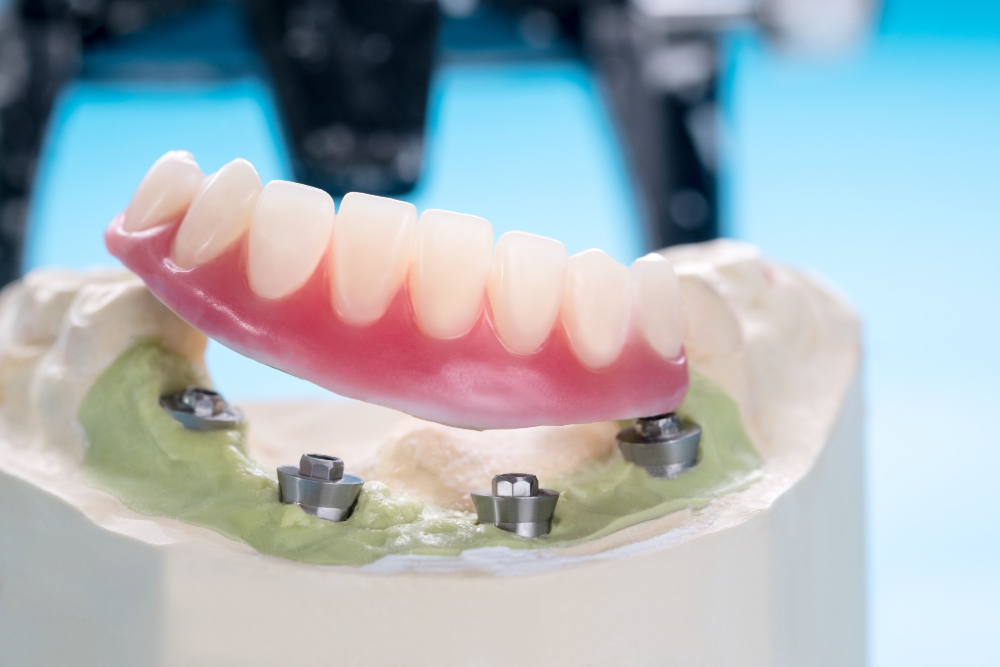
What Are Implant-Supported Dentures?
Implant-supported dentures are a type of secure dentures that use dental implants for support. Unlike regular dentures, these attach to small metal posts placed in your jawbone. As a result, they stay in place much better. Many people choose implant-supported dentures as an alternative to loose dentures. In most cases, they look and feel more like natural teeth.
Common Problems With Loose Removable Dentures
Traditional removable dentures can cause several problems. For example, they may slip or move while you eat or talk. This can lead to discomfort or even embarrassment. Additionally, loose dentures might cause sore spots on your gums. Over time, they can also make it harder to chew certain foods. Because of these issues, many people look for alternatives to loose dentures.
How Implant-Supported Dentures Work
Implant-supported dentures use dental implants for dentures to hold them steady. First, a dentist places small metal posts, called implants, into your jawbone. After the bone heals around these posts, the dentist attaches the denture to the implants. Because the denture snaps onto the implants, it stays secure. However, you can still remove the denture for cleaning. This system offers a strong and stable fit.
Benefits of Implant-Supported Dentures
There are many reasons people choose implant-supported dentures. For instance, they do not slip or move like regular dentures. As a result, you can eat and speak with more confidence. In addition, these secure dentures help keep your jawbone healthy. Since the implants act like natural tooth roots, they prevent bone loss. Furthermore, many people find them more comfortable than loose dentures.
Who Is a Good Candidate?
Not everyone can get implant-supported dentures. Still, many adults are good candidates. You may be a good fit if you have enough healthy jawbone. Also, your gums should be in good shape. However, some health conditions, like uncontrolled diabetes, may affect healing. Therefore, your dentist will check your health and bone before starting. Even if you have lost bone, bone grafting may help.
The Procedure: What to Expect
First, your dentist will take x-rays and check your mouth. Next, they will place the dental implants into your jawbone. This is usually done with local anesthesia. After the implants are placed, you will need to wait a few months. During this time, your bone grows around the implants. Once healed, the dentist attaches the denture to the implants. Finally, you will learn how to care for your new secure dentures.
Care and Maintenance Tips
Even though implant-supported dentures are secure, they still need care. For example, you should clean them every day. Use a soft brush to remove food and plaque. Also, clean around the implants to keep your gums healthy. Your dentist may suggest special cleaning tools. In addition, regular dental check-ups are important. This helps catch any problems early.
Potential Risks and Considerations
While implant-supported dentures are safe for most people, there are some risks. For instance, the surgery may cause swelling or discomfort. Rarely, the implants may not bond to the bone. Smoking or certain health issues can increase this risk. However, most people heal well and enjoy long-lasting results. Your dentist will discuss any concerns before you start.
Frequently Asked Questions
Conclusion
If you are tired of loose dentures, implant-supported dentures may help. Schedule a visit with Aryas Dental to see if this secure option is right for you.